 Cardex
Quick answer: Japanese Pokémon cards usually sell for less than the same card in English. Across 766 cards matched between 14 recent Japanese sets and their English versions, the median Japanese copy costs about 61% of the English one, and only 22% cost more. The exception is the gold top tier: Japanese Mega Ultra Rares sell for about 2 times their English Mega Hyper Rares and Japanese gold Ultra Rares sell for about 1.3 times their English Hyper Rares. Japanese sets come out first, a median of 2 months (same day to 3 months) before the English set, with smaller packs and their own rarity codes.

Got a Japanese card? Cardex identifies Japanese cards as well as English ones and shows what that exact card sells for. See how the identifier works.
Get the free appAre Japanese Pokémon cards worth more than English?
Usually not, but it depends on the rarity. We matched every card we could between recent Japanese sets and the English sets made from them, then compared their near-mint prices slot for slot: a Japanese Special Art Rare against the same Pokémon's English Special Illustration Rare, a Japanese gold Ultra Rare against the English Hyper Rare, and so on.
The table compares each card with the same card in English, slot for slot. "Japanese price" is the median Japanese near-mint price as a share of the English one; 100% means the same price.
| English rarity | Japanese rarity | Cards matched | Japanese price vs English | Japanese copy costs more |
|---|---|---|---|---|
| Mega Hyper Rare | MUR Mega Ultra Rare | 7 | 204% | 100% |
| Hyper Rare | UR Ultra Rare | 23 | 126% | 57% |
| Special Illustration Rare | SAR Special Art Rare | 129 | 62% | 30% |
| Shiny Ultra Rare | SSR Shiny Super Rare | 12 | 62% | 0% |
| Ultra Rare | SR Super Rare | 169 | 94% | 45% |
| Illustration Rare | AR Art Rare | 285 | 57% | 10% |
| Double Rare | RR Double Rare | 141 | 51% | 5% |
Special Illustration Rares, the chase cards most people want, sell for about 62% of their English price in Japanese. The gold cards are the only tier where Japanese copies usually cost more. Prices updated November 17, 2026.
The most valuable cards, priced in both languages
| Card | English (NM) | Japanese (NM) | Japanese vs English |
|---|---|---|---|
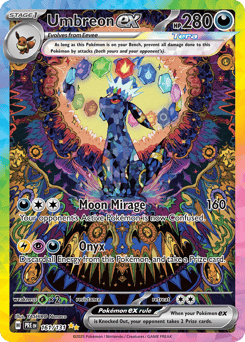 Umbreon ex #161/131 Special Illustration Rare Terastal Festival ex #217/187 | $1,175.85 | $337.53 | 29% |
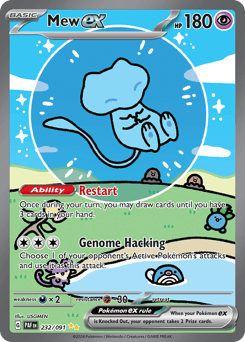 Mew ex #232/091 Special Illustration Rare Shiny Treasure ex #347/190 | $805.70 | $496.97 | 62% |
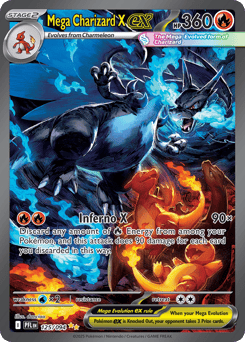 Mega Charizard X ex #125/094 Special Illustration Rare Inferno X #110/080 | $528.72 | $654.46 | 124% |
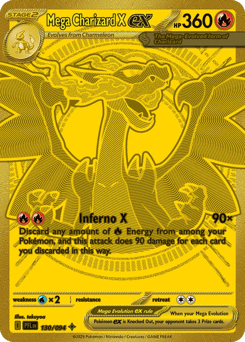 Mega Charizard X ex #130/094 Mega Hyper Rare Inferno X #116/080 | $181.57 | $633.12 | 349% |
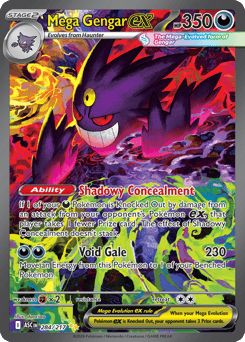 Mega Gengar ex #284/217 Special Illustration Rare MEGA Dream ex #240/193 | $555.33 | $243.23 | 44% |
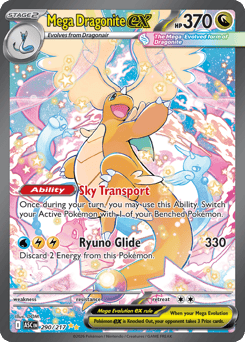 Mega Dragonite ex #290/217 Special Illustration Rare MEGA Dream ex #246/193 | $382.03 | $147.49 | 39% |
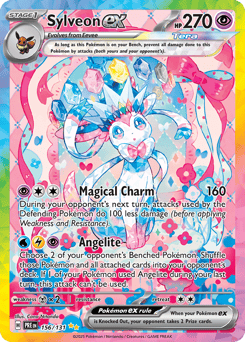 Sylveon ex #156/131 Special Illustration Rare Terastal Festival ex #212/187 | $376.22 | $99.25 | 26% |
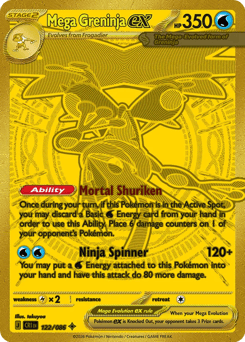 Mega Greninja ex #122/086 Mega Hyper Rare Ninja Spinner #120/083 | $109.17 | $375.39 | 344% |
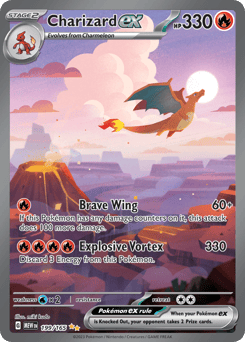 Charizard ex #199/165 Special Illustration Rare Pokémon Card 151 #201/165 | $283.39 | $370.86 | 131% |
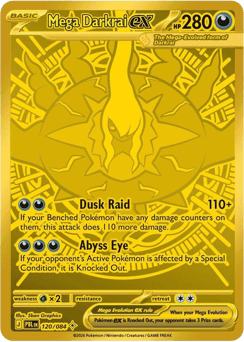 Mega Darkrai ex #120/084 Mega Hyper Rare Abyss Eye #118/081 | $116.78 | $368.24 | 315% |
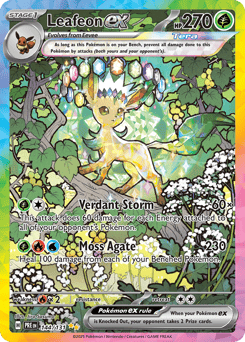 Leafeon ex #144/131 Special Illustration Rare Terastal Festival ex #200/187 | $259.02 | $44.47 | 17% |
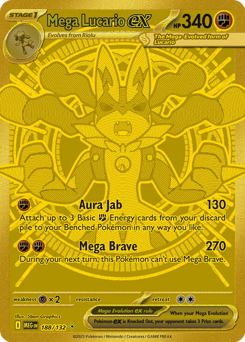 Mega Lucario ex #188/132 Mega Hyper Rare Mega Brave #092/063 | $191.58 | $253.35 | 132% |
The most valuable card on the list, Umbreon ex from Prismatic Evolutions, sells for $1,175.85 in English and $337.53 in Japanese. 6 of these 12 cards cost more in Japanese, led by Mega Charizard X ex from Phantasmal Flames at $654.46 against $528.72.
Japanese sets and the English sets they became
Japanese sets usually come out first, and an English set often combines cards from one or two of them. Mega Brave and Mega Symphonia, for example, became the single English Mega Evolution set. Because the card lists change, so do the numbers: Mega Charizard X ex is #110/080 in Japanese Inferno X and #125/094 in English Phantasmal Flames.
| English set | Japanese set | Out in Japan | Out in English | Chase cards matched | Japanese price vs English |
|---|---|---|---|---|---|
 30th Celebration | 30th Celebration (M6a) | September 16, 2026 | September 16, 2026 same day | 7 | 93% |
 Pitch Black | Abyss Eye (M5) | May 22, 2026 | July 17, 2026 2 months later | 6 | 44% |
 Chaos Rising | Ninja Spinner (M4) | March 13, 2026 | May 22, 2026 2 months later | 7 | 54% |
 Perfect Order | Nihil Zero (M3) | January 23, 2026 | March 27, 2026 2 months later | 7 | 59% |
 Ascended Heroes | MEGA Dream ex (M2a) | November 28, 2025 | January 30, 2026 2 months later | 17 | 48% |
 Phantasmal Flames | Inferno X (M2) | September 26, 2025 | November 14, 2025 2 months later | 6 | 81% |
 Mega Evolution | Mega Symphonia (M1S) and Mega Brave (M1L) | August 1, 2025 | September 26, 2025 2 months later | 11 | 50% |
 Black Bolt | Black Bolt (SV11B) | June 6, 2025 | July 18, 2025 42 days later | 6 | 65% |
 White Flare | White Flare (SV11W) | June 6, 2025 | July 18, 2025 42 days later | 7 | 92% |
 Prismatic Evolutions | Terastal Festival ex (SV8a) | December 6, 2024 | January 17, 2025 42 days later | 36 | 25% |
 Paldean Fates | Shiny Treasure ex (SV4a) | December 1, 2023 | January 26, 2024 2 months later | 26 | 66% |
 Scarlet & Violet 151 | Pokémon Card 151 (SV2a) | June 16, 2023 | September 22, 2023 3 months later | 10 | 131% |
 Obsidian Flames | Ruler of the Black Flame (SV3) | July 28, 2023 | August 11, 2023 14 days later | 9 | 194% |
 Scarlet & Violet | Scarlet ex (SV1S) and Violet ex (SV1V) | January 20, 2023 | March 31, 2023 2 months later | 16 | 238% |
Chase cards here are Special Illustration Rares, Hyper Rares, Mega Hyper Rares and Shiny Ultra Rares. Japanese chase cards cost more than English ones in Scarlet & Violet 151, Obsidian Flames and Scarlet & Violet. The biggest gap is Prismatic Evolutions, where the Japanese copies sell for 25% of the English price.
30th Celebration broke the pattern: it came out worldwide on the same day, September 16, 2026. The next Japanese set, Aura Seeker, is due on November 27, 2026.
How Japanese Pokémon cards are different
- They come out first. In the Scarlet & Violet and Mega Evolution eras the English version has usually followed six to ten weeks later, so collectors know a set's chase cards, and what they sell for in Japan, before the English set is out.
- Smaller, cheaper packs. A standard Japanese pack has 5 cards, against 10 in an English booster pack. Special "high class" sets come in 10-card packs instead.
- Rarity as letters. Instead of the English symbols, the rarity is printed as a code such as AR, SR or SAR next to the collector number.
- A different card back. Japanese cards have their own back design, which is why tournaments treat them as marked (more on that below).
- Different numbering. The same card usually has a different collector number in each language, because the sets are built differently.
- Holo patterns, in older eras. In the Sun & Moon era only the Japanese cards carried the holo pattern onto the border, and XY-era Japanese holos covered the whole card rather than just the picture.
You'll also read that Japanese cards have better centering, texture and print quality. That's a common view among collectors and retailers, but we found no official source for it, and retailers can't even agree on whether Japanese card stock is thinner or thicker. Retailers list both at the standard 63 by 88 mm.
Japanese packs and boxes
| Japanese standard pack | Japanese high class pack | English booster pack | |
|---|---|---|---|
| Cards per pack | 5 | 10 | 10 |
| Pack price | 200 yen (180 yen until Ninja Spinner, March 2026) | 550 yen | Set by retailer |
| Packs per box | 30 (5,400 to 6,000 yen) | 10 (5,500 yen) | 36 in a booster display |
| Examples | Abyss Eye, Storm Emeralda, Aura Seeker | Shiny Treasure ex, Terastal Festival ex, MEGA Dream ex | Pitch Black, Delta Reign |
Some sets use other formats: Japanese 151, Black Bolt and White Flare came in 7-card packs at 290 yen, and 30th Celebration in 6-card packs at 360 yen. Prices are The Pokémon Company's official Japanese prices, including tax, from pokemon-card.com and Pokémon Center Online.
Japanese rarity codes and their English names
Since Scarlet & Violet, every Japanese rarity has an English counterpart, but the names don't line up. A Japanese "Ultra Rare" (UR) is the gold card the English sets call a Hyper Rare, and the English "Ultra Rare" is a Japanese SR.
| Japanese code | Japanese name | English name |
|---|---|---|
| C, U, R | Common, Uncommon, Rare | Common, Uncommon, Rare |
| RR | Double Rare | Double Rare (the regular ex cards) |
| AR | Art Rare | Illustration Rare |
| SR | Super Rare | Ultra Rare (full art) |
| SAR | Special Art Rare | Special Illustration Rare |
| UR | Ultra Rare | Hyper Rare (gold) |
| MUR | Mega Ultra Rare | Mega Hyper Rare (gold Mega ex) |
| MA | Mega Attack Rare | Mega Attack Rare |
| S, SSR | Shiny Rare, Shiny Super Rare | Shiny Rare, Shiny Ultra Rare |
| ACE | ACE SPEC | ACE SPEC Rare |
| BWR | Black White Rare | Black White Rare |
Older Japanese cards use a few more: HR for the Sword & Shield rainbow cards (not the same as today's English Hyper Rare), RRR for VMAX and VSTAR cards, CHR and CSR for the character cards closest to the English Trainer Gallery, A for Amazing Rares and K for Radiant Pokémon. Sources: TCGplayer and Bulbapedia. For the English symbols, see our rarity symbols chart.
How to read a Japanese Pokémon card
Everything you need to identify a Japanese card is in the bottom corner, even if you can't read Japanese:
- Regulation mark: a single letter in a box, used to decide which cards are legal in the Standard format.
- Set code: the expansion mark next to it, a short code such as SV2a or M2 that names the set.
- Collector number: the card's number over the set total, such as 110/080. A first number higher than the second means a secret rare; see our secret rare guide.
- Rarity code: the letters next to the number, such as SAR. Use the table above to find the English name.
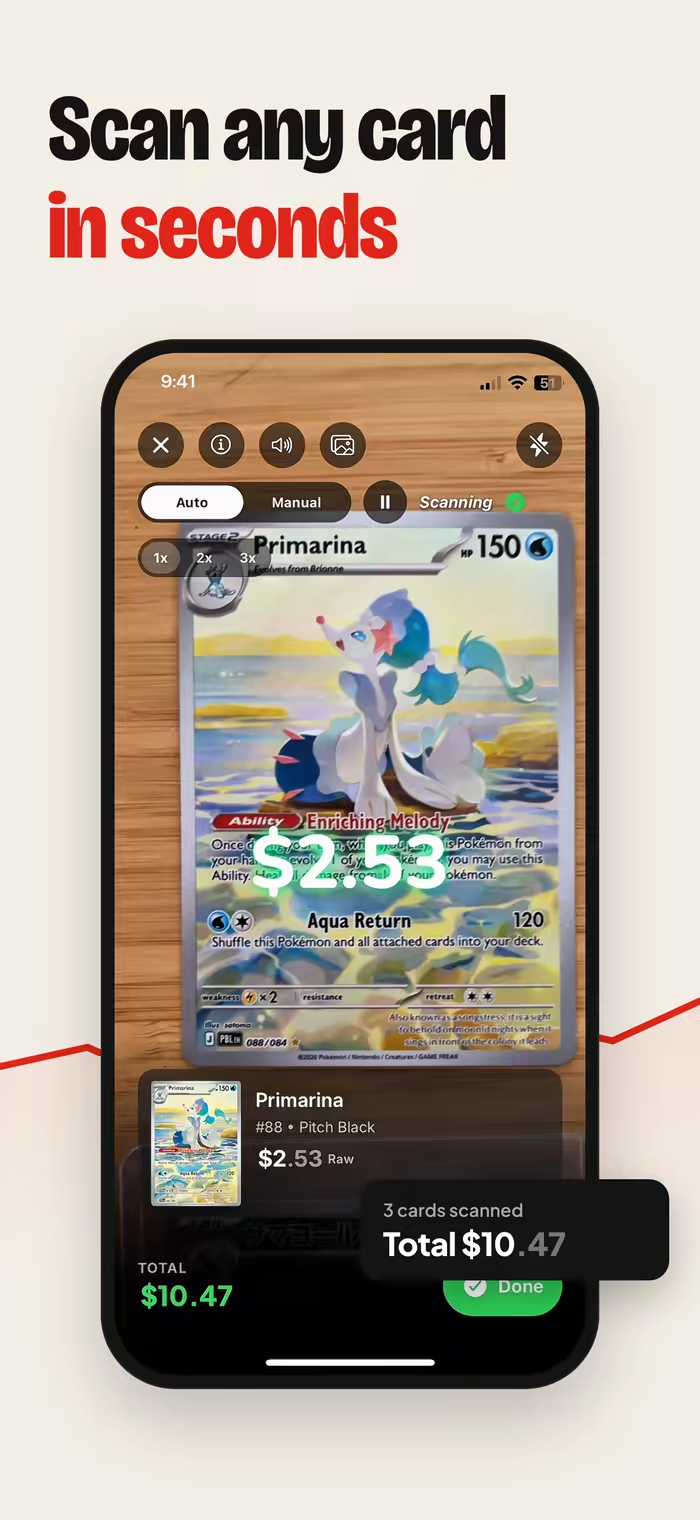
To find the English version, look up the set code in the set table above, open the English set and search for the Pokémon by name. Don't search by number, because it changes between languages. Or scan the card: Cardex recognizes Japanese cards and shows the card, set, rarity and price.
Grading Japanese cards
PSA, CGC and Beckett all grade Japanese cards. PSA's labels name the language and set, for example "Pokemon Japanese SV2a-Pokemon Card 151". CGC says it grades standard-size Pokémon cards in every language, though it may reject some foreign promos it can't place.
Grading adds less to a Japanese card. Across 169 matched chase cards with PSA 10 sales in both languages, an English PSA 10 sells for a median 4.7 times its raw near-mint price, and a Japanese PSA 10 for 3.0 times. Before you grade a Japanese card, compare its PSA 10 price with the raw price rather than with the English slab.
Our grading profit calculator works for Japanese cards too: enter the Japanese raw and PSA 10 prices instead of the English ones.
Can you play Japanese cards in tournaments?
Not at official events in the US and Canada. The Play! Pokémon tournament handbook (revised September 1, 2026) allows only English cards there, and it calls Japanese cards "marked" because their backs differ from every other language. Mixed-language decks are only allowed when the backs are consistent, so Japanese and English cards can't share a deck. For local league events the language rules are up to the organizer.
Where to check Japanese card prices
- TCGplayer has had a separate Pokémon Japan section since October 2024, with Japanese cards listed under their English names.
- PriceCharting has "Pokemon Japanese" pages for each set.
- Cardmarket, in Europe, lets you filter any card by language.
- eBay sold listings show what Japanese cards actually sold for. Add "Japanese" and the set code to your search. Our guide to checking recent sales shows how.
- Japanese shops such as Yuyu-tei and the SNKRDUNK app show what cards sell for in Japan itself.
Cardex prices Japanese cards as well as English ones, in over 30 currencies, from the same data as the tables on this page.
Spotting fake Japanese cards
A genuine Japanese card has a different back from an English one, so compare a card you're unsure about with a real Japanese card, not an English one. TCGplayer calls the back comparison the most reliable test. A CGC alert on a fake Japanese Cyndaquil lists the usual signs: washed-out yellowish colour, blurry lines, a missing set symbol, a bold and cramped font, a typo in an attack name and fuzzy, off-centre text on the back. The Pokémon Company has also warned Japanese buyers about unlicensed "replica" and "metal" cards. Our guide to spotting fake Pokémon cards covers the checks in detail.
Japanese or English: which should you collect?
- You want chase cards for a binder on a budget: Japanese. Most Illustration Rares and Special Illustration Rares cost noticeably less in Japanese, and the art is the same.
- You want the gold Mega cards: check both. These are the cards where the Japanese copy usually costs more.
- You plan to grade and sell: compare the PSA 10 prices in both languages first. A Japanese PSA 10 usually adds less to the raw price than an English one.
- You play in tournaments outside Japan: English, because Japanese cards aren't allowed at official US events.
- You want a set early: Japanese sets come out first, usually by about two months.
Price Japanese and English cards with Cardex
Scan a card in either language to see the exact card, set, rarity and what it sells for. More than 40,000 English and Japanese cards, prices updated daily. iPhone, iPad and Android.


How we compared prices
We paired 14 English sets with the Japanese sets they were translated from and matched each card by its English name and rarity slot. A Japanese Special Art Rare is compared with the same Pokémon's English Special Illustration Rare, a Japanese Ultra Rare with the English Hyper Rare, and so on. Cards that appear several times in one slot are matched in number order, and cards we couldn't pair one to one are left out. Prices are near-mint market prices in US dollars from the same data the Cardex app uses, refreshed daily. The latest update is from November 17, 2026.
Japanese Pokémon card questions
Are Japanese Pokémon cards worth more than English?
Usually not. We matched 766 cards from 14 recent sets with their English versions, and the Japanese copy sells for about 61% of the English price. Only 22% of Japanese copies cost more. The exception is the gold top tier: Japanese Mega Ultra Rares sell for about 2 times their English Mega Hyper Rares and Japanese gold Ultra Rares sell for about 1.3 times their English Hyper Rares.
Why are Japanese Pokémon cards cheaper?
Mostly demand. In the US and Europe, English cards are the ones allowed at official tournaments and the ones most local collectors chase, so the English copy of a card usually has more buyers. Japanese packs are also cheap at home: a standard pack is 5 cards for 200 yen. The gold Mega cards are the exception. Chase cards from Scarlet & Violet 151, Obsidian Flames and Scarlet & Violet also cost more in Japanese right now.
Can you play Japanese Pokémon cards in tournaments?
Not at official events in the US or Canada. The Play! Pokémon tournament handbook allows only English cards there and treats Japanese cards as marked, because their backs are different. Local league events are up to the organizer, and a deck can only mix languages if all the backs match.
What do the letters on Japanese Pokémon cards mean?
They are the rarity, printed next to the collector number in the bottom corner. AR (Art Rare) is the English Illustration Rare, SR (Super Rare) the English Ultra Rare, SAR (Special Art Rare) the Special Illustration Rare, and UR (Ultra Rare) the gold Hyper Rare. MUR is the gold Mega card, called Mega Hyper Rare in English.
How long after Japan do Pokémon sets come out in English?
Across the 14 set pairs on this page, the English release came a median of 2 months (same day to 3 months) after the Japanese one. English sets are often built from one or two Japanese sets, so the card list and numbering change too.
Does Cardex scan Japanese Pokémon cards?
Yes. Cardex identifies and prices Japanese cards as well as English ones, more than 40,000 cards in all, with near-mint prices updated daily. It's free to download, and your first 3 scans are free.