 Cardex
Start with four storage levels, not one solution for everything
Giving every card a rigid case is expensive and makes a collection awkward to use. Leaving every card loose in a tin makes it easy to scratch or bend the cards you later discover are important. The practical middle ground is to sort cards by how valuable, fragile or frequently handled they are.
| What you are storing | A practical home | Why it fits |
|---|---|---|
| Favorites, set cards and display cards | Sleeve + side-loading binder pocket | Easy to browse while keeping cards separated |
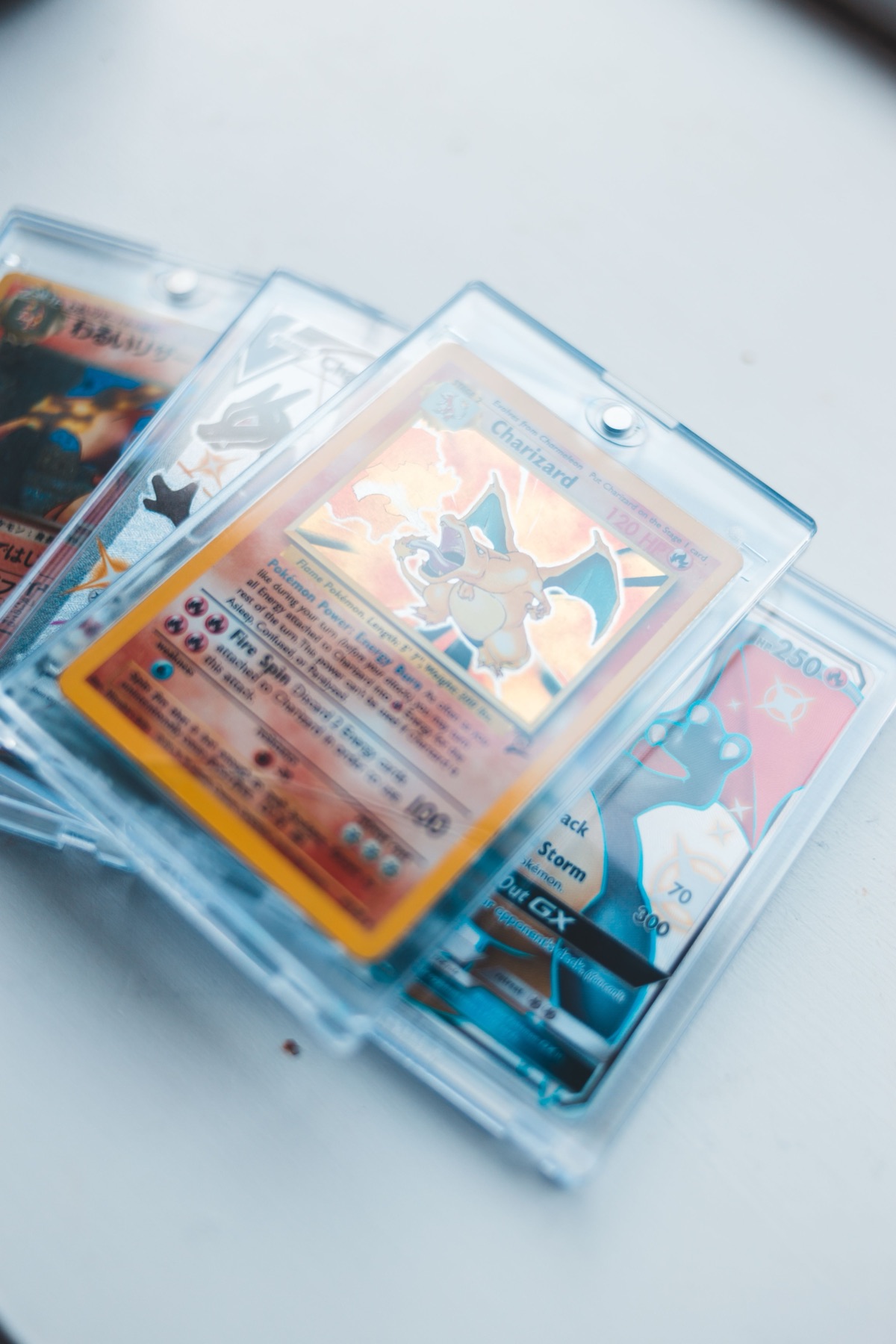
| High-value pulls or cards you may grade | Soft sleeve + rigid holder or semi-rigid holder | More support against bends, pressure and repeated handling |
| Duplicates, Energy cards and low-priority bulk | Labelled trading-card storage box with dividers | Space-efficient and easy to sort by set or card number |
| Already graded cards | Slab sleeve or bag + a box made for graded cards | Keeps hard cases from rubbing together in storage |
The goal is not to guess which cards will become expensive. It is to make sure your best cards do not take the same risks as a stack of ordinary duplicates.
1. Sleeve cards before they become a problem
A soft sleeve is the first layer of protection. It reduces direct contact with the card surface while you sort, browse or move cards between a binder and a box. For cards you want to preserve long term, look for sleeves and pages labelled archival-safe, acid-free and PVC-free for the material that touches the card.
Use a sleeve that fits the card. A sleeve that is too tight can catch a corner while you insert the card; one that is much too large lets the card slide around. Start with clean, dry hands and a clear surface. Hold the card by its edges, then slide it in gently instead of pushing down on the artwork.
2. Use binders for cards you want to see
A binder is a good home for set projects, favorite Pokémon, artwork collections and trade pages. It makes the collection usable: you can compare cards, spot missing numbers and enjoy it without digging through a box. Use pages made for standard trading cards, keep one card per pocket and avoid forcing a card into a tight slot.
For a collection you handle often, side-loading pockets and a zipper give you an extra margin against cards sliding out when the binder moves. Whatever binder you choose, do not overfill it. A binder that bows, will not close flat or presses pages against each other is asking the cards to absorb the pressure instead.
Organize the binder in a way that will still make sense later: by set and collector number for a master-set project, by Pokémon or artwork for favorites, or in a separate trade binder for cards you may move. Our guide to organizing Pokémon cards walks through these systems in more detail.
3. Give valuable cards a rigid outer layer
For a card you would be upset to bend, use a soft sleeve first and then a rigid holder such as a toploader, a semi-rigid holder or another purpose-made case. The soft sleeve protects the card from rubbing directly against the harder holder; the outer layer gives it structural support. This sleeve-first approach is also recommended by card-protection specialists such as Ultra PRO.
Rigid protection is useful, not magical. It does not undo existing scratches, solve a humidity problem or guarantee a professional grade. Choose a holder that fits the thickness of the card, make sure the card is seated gently, and avoid packing several cards into a holder made for one.
4. Keep bulk in labelled boxes, not loose piles
Bulk does not need to be neglected; it just needs a cheaper system. A card storage box with dividers lets you separate cards by set, type, language or collector number. Label the outside so you do not have to open five boxes to find a particular expansion.
Do not pack a box so tightly that you have to bend cards to remove them, and do not leave enough empty space for stacks to slump over. A snug, upright row with a divider is easier on corners than a loose pile. Keep cards flat and supported when you are moving the box.
5. The room matters as much as the sleeve
Trading cards are paper-based objects, so the same basic preservation principles apply: a clean, stable environment is kinder than heat, dampness and strong light. The Library of Congress recommends cool, relatively dry, stable storage for paper objects and minimal exposure to direct or intense light. The Smithsonian similarly advises keeping paper collections away from heat, moisture and continuous light exposure.
At home, that usually means an interior cupboard or shelf in a lived-in room rather than an attic, garage, car, damp basement or space beside a radiator, vent or window. Do not store cards directly on the floor where a small leak can reach them first. Avoid leaving a binder open in direct sun as decoration; light damage accumulates over time.
A simple home storage checklist
- Keep cards out of direct sunlight and away from windows.
- Avoid rooms that swing between hot, cold, damp and dry.
- Keep food, drinks, smoke and cleaning chemicals away from the collection.
- Store boxes on a shelf rather than directly on the floor.
- After a spill or water leak, separate affected cards promptly and get professional conservation advice for valuable items rather than experimenting with heat or chemicals.
6. Handle cards less, but handle them better
Most small flaws come from normal use: a corner catches while the card enters a sleeve, a page closes over a card, or a card gets moved repeatedly while a collector decides where it belongs. Slow down around the cards that matter. Use clean, dry hands, pick up cards by the edges and make a clear workspace before you start sorting.
If a card already has a crease, staining, peeling or a damp smell, do not try to repair it with household cleaners, tape, an iron or heavy objects. Those fixes can create new damage and make it harder for a buyer or grader to assess the real condition. Our Pokémon card condition guide explains what to inspect before you price, sell or grade a card.
Know what is inside each box and binder
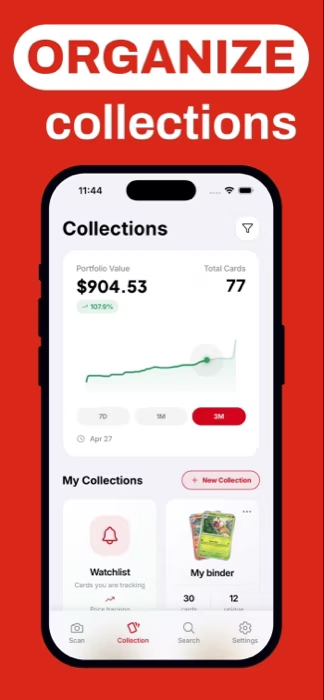
Scan cards into Cardex before storage to identify the exact card, track collection value and keep separate binder-style collections for favorites, sets and trades.


A low-cost setup that covers most collections
You do not need to buy everything at once. Start with a pack of good sleeves, a binder for cards you enjoy viewing and a labelled box for the rest. Add rigid holders only for pulls, favorites or cards whose condition and value justify the extra protection. As your collection grows, the system can grow with it.
Before giving a card the most protection, identify the exact printing and check what similar copies are selling for. Cardex can help with the identification and market-price part; the decision about how to protect your physical copy is still yours. Start with our Pokémon card value guide if you are unsure where to begin.
Frequently asked questions
Should every Pokémon card go in a sleeve?
Not every common card needs the same level of protection, but sleeving cards you value or handle often is a simple way to reduce surface wear. For valuable cards, use a clean soft sleeve before placing the card in a rigid holder or a suitable binder pocket.
Are binders or toploaders better for Pokémon cards?
Binders are better for viewing and organizing many cards. A soft sleeve plus a rigid holder is a better fit for a small number of valuable cards that need more support. The best choice depends on value, handling and whether you want to display the card.
Where should I store Pokémon cards at home?
Choose a clean, stable indoor area away from direct sunlight, water, radiators, vents, attics, garages and damp basements. Avoid places with large swings in temperature or humidity.
Can I put more than one Pokémon card in a binder pocket?
For a collection you want to keep clean, use one card per pocket and do not force a card into a tight slot. Stacking cards makes them harder to view and increases the chance of edge, surface or pressure damage when pages move.