 Cardex
Quick answer: the small shape next to the collector number is the rarity symbol. A circle is Common, a diamond is Uncommon and a star is Rare. On current sets, extra stars and star colors mark the higher tiers: two black stars for Double Rare, two silver stars for Ultra Rare, one gold star for Illustration Rare, two gold stars for Special Illustration Rare and three gold stars for Hyper Rare.

Can't make out the symbol? Scan the card with Cardex and it shows the rarity, set and current price. See how the scanner works.
Get the free appWhere to find the rarity symbol
Look at the bottom corner of the card, next to the collector number (for example 081/244). The small printed shape there is the rarity symbol. On English cards it usually sits at the bottom left on modern printings and at the bottom right on older ones. Japanese cards print a letter code such as RR or SAR in the same spot instead of a shape.
The symbol tells you how the card was distributed in booster packs. It does not tell you what the card is worth on its own, but it is the fastest first clue, and it is the first thing a buyer or a scanner app checks.
Pokémon card rarity symbols chart
This chart covers every rarity symbol you will see on English cards from the Scarlet & Violet era (2023) onward, including the Mega Evolution era sets released from late 2025.
| Symbol | Rarity | What it marks |
|---|---|---|
| Common | Basic Pokémon, most Trainers and Energy | |
| Uncommon | Stage 1 Pokémon, many Trainers | |
| Rare | Stage 2 Pokémon and other rares, often holo | |
| Double Rare | Regular Pokémon ex | |
| Ultra Rare | Full Art Pokémon ex and Full Art Supporters | |
| Illustration Rare | Full Art scenic artwork of non-ex Pokémon | |
| Special Illustration Rare | Extended artwork Pokémon ex and Supporters, the usual chase cards | |
| Hyper Rare | Gold-colored Pokémon, Items and Energy | |
| Black White Rare | Special secret rares in Black Bolt and White Flare (2025), such as Victini | |
| ACE SPEC Rare | ACE SPEC Trainer and Energy cards (one per deck) | |
| Shiny Rare | Shiny Pokémon in sets like Paldean Fates | |
| Shiny Ultra Rare | Shiny Full Art Pokémon ex | |
| Mega Attack Rare | Mega Evolution era ex cards with special attack artwork | |
| Mega Hyper Rare | Mega Evolution era gold cards | |
| PROMO | Promo | Cards from tins, boxes, events and Pokémon Center |
Most of the table is stars, and the color and count matter more than anything else on it. Our guide to what the stars on Pokémon cards mean goes through gold, silver, pink and hollow stars one at a time.
The symbol tells you how hard a card is to pull, not what it sells for. The real prices by rarity below show what each tier is actually worth today, and the last step is always checking the exact card's current price.

Know the rarity? Now check the price. The symbol tells you the tier, not the value. Scan the card with Cardex to see what your exact printing sells for today. See how the scanner works.
Get the free appWhat each rarity is worth: real prices
We looked at the current near-mint price of 4,514 cards from 23 Scarlet & Violet and Mega Evolution expansions. The median is the price of the typical card in each tier; the middle range covers half of all cards in it. Prices updated October 30, 2026.
| Rarity | Cards | Median price | Middle range | Most valuable right now |
|---|---|---|---|---|
| Common | 1,473 | $0.14 | $0.11 – $0.18 | Slowpoke Stellar Crown · $2.83 |
| Uncommon | 994 | $0.15 | $0.11 – $0.19 | Reuniclus Black Bolt · $12.77 |
| Rare | 366 | $0.21 | $0.17 – $0.28 | Armarouge Pitch Black · $70.34 |
| ACE SPEC Rare | 33 | $0.50 | $0.35 – $1.27 | Hero's Cape Temporal Forces · $23.70 |
| Double Rare | 329 | $0.71 | $0.59 – $0.99 | Pecharunt ex Shrouded Fable · $8.61 |
| Shiny Ultra Rare | 12 | $1.74 | $1.18 – $2.46 | Mew ex Paldean Fates · $33.09 |
| Ultra Rare | 356 | $2.09 | $1.19 – $3.75 | Gengar ex Temporal Forces · $51.75 |
| Shiny Rare | 120 | $4.52 | $2.90 – $8.44 | Pikachu Paldean Fates · $72.88 |
| Mega Attack Rare | 7 | $4.82 | $2.99 – $5.61 | Mega Gengar ex Ascended Heroes · $32.39 |
| Hyper Rare | 74 | $7.81 | $4.46 – $11.75 | Pikachu ex Surging Sparks · $67.51 |
| Illustration Rare | 510 | $9.95 | $4.76 – $18.81 | Magikarp Paldea Evolved · $289.43 |
| Special Illustration Rare | 232 | $29.47 | $16.91 – $58.71 | Umbreon ex Prismatic Evolutions · $1,137.17 |
| Mega Hyper Rare | 8 | $153.40 | $112.85 – $183.68 | Mega Charizard Y ex Ascended Heroes · $234.05 |
Two things stand out. A typical Special Illustration Rare ($29.47) is worth about 3 times a typical Illustration Rare ($9.95), which is why two gold stars is the first thing to look for. And three gold stars does not beat one: the median Hyper Rare ($7.81) is worth less than the median Illustration Rare, because collectors pay for artwork more than for gold foil. Regular Double Rare ex cards are close to bulk at a median of $0.71.
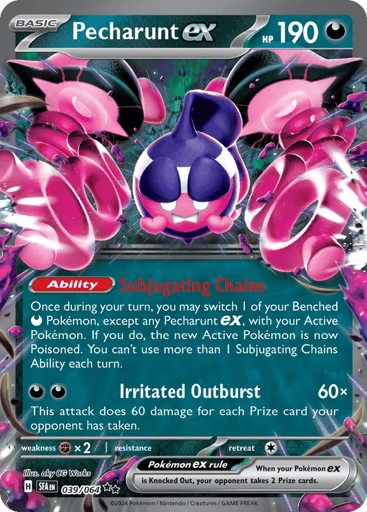
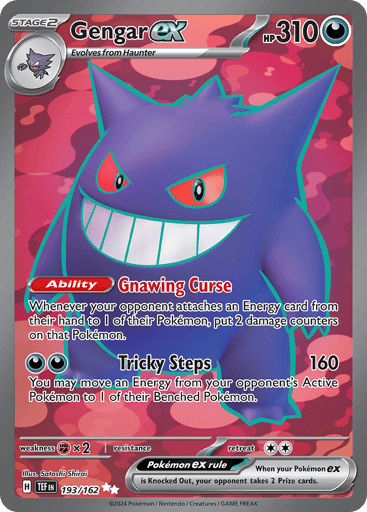
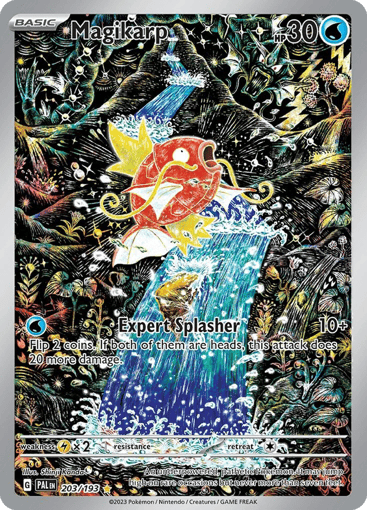
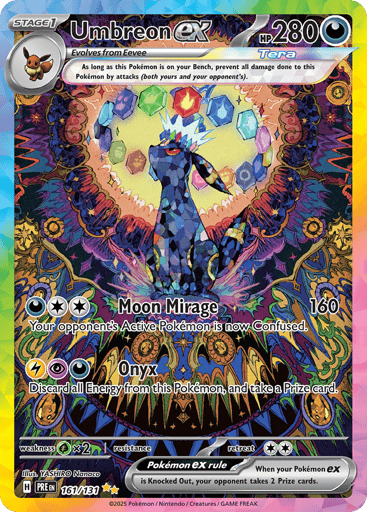
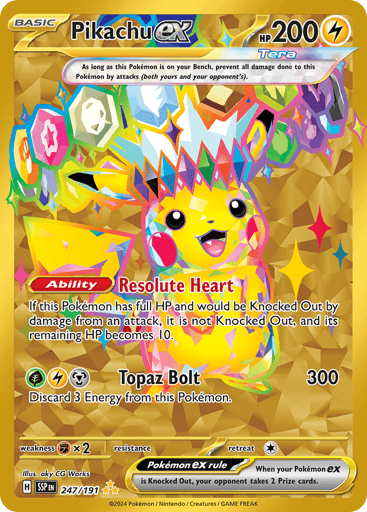
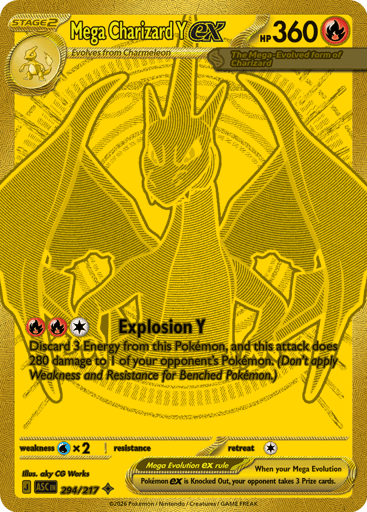
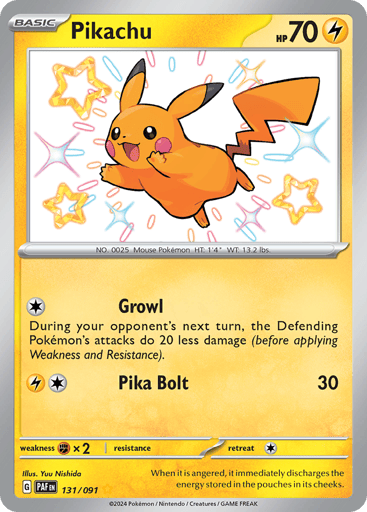

The most valuable card in each tier right now. Click a card to see its set's full card list and prices, or browse all Pokémon card sets.
What do the symbols on Pokémon cards mean?
Rarity is only one of several small marks printed on a card. If you are staring at the bottom edge wondering what everything means, here is the full list:
- Rarity symbol (circle, diamond, star or stars): how rare the card is in booster packs. Explained throughout this guide. For every other part of the card, from HP to attack costs, see how to read a Pokémon card.
- Collector number (081/244): this card's position in the set and the number of cards in the main set. A first number larger than the second means a secret rare.
- Set symbol: a small icon unique to each expansion. Modern cards also print a three-letter set code such as SVI, PAF or MEG in a small box. See how to identify a card's set.
- Regulation mark (a letter such as G, H or I in a box): which tournament format the card is legal in. It says nothing about rarity or value.
- Energy type symbol (top right): the card's type, such as Fire, Water or Psychic.
- Stage (top left): Basic, Stage 1 or Stage 2, plus tags like ex, V or VSTAR.
- Illustrator credit and copyright line: the artist's name and the copyright year range, which narrows the era for vintage cards.
- 1st Edition stamp (vintage only): a small "Edition 1" mark on the left of the art box on early Wizards of the Coast sets. It can multiply value many times over.
Modern rarity tiers explained (Scarlet & Violet and Mega Evolution eras)
When Scarlet & Violet launched in 2023, the English rarity system was rebuilt to match the Japanese one. Instead of a single star for everything above Rare, each tier now gets its own star count and color. This is the system used by every current set.
Double Rare (two black stars)
The regular version of a Pokémon ex: standard frame, holo artwork, printed within the main set numbering. Most Double Rares sell for under a dollar and only the most popular Pokémon reach a few dollars. If you are sorting bulk, pull them out anyway: they are the easiest cards to trade or sell in lots.
Ultra Rare (two silver stars)
Full Art Pokémon ex and Full Art Supporter cards with textured foil. They are numbered above the main set count. Prices are driven by the Pokémon or character on the card far more than by the tier itself.
Illustration Rare (one gold star)
Scenic alternate artwork of regular, non-ex Pokémon. These are the cards collectors chase for the art rather than for gameplay, and a beloved Pokémon in a popular scene can outprice most Ultra Rares from the same set.
Special Illustration Rare (two gold stars)
Extended artwork versions of Pokémon ex and Supporters, textured, numbered high in the set. In almost every modern expansion the most valuable card is a Special Illustration Rare, for example the Charizard ex from Obsidian Flames, the Umbreon ex from Prismatic Evolutions or the Pikachu ex from Surging Sparks. If your card has two gold stars, check its price before you do anything else.
Hyper Rare (three gold stars)
Gold-colored cards. They sit at the very end of the set numbering and are hard to pull, but they are often worth less than the Special Illustration Rare of the same Pokémon because collectors prefer the artwork on the SIR. Rarity and value are not the same thing.
ACE SPEC Rare (one pink star)
Powerful Trainer and Energy cards limited to one per deck, marked with a pink star. Reintroduced in Temporal Forces in 2024. Prices follow tournament demand.
Shiny Rare and Shiny Ultra Rare (hollow gold stars)
Shiny Pokémon, most familiar from Paldean Fates. A Shiny Rare has one hollow gold star and a Shiny Ultra Rare has two. They are easy to confuse with Illustration Rares and Special Illustration Rares at a glance, so look for the hollow outline and the shiny coloring of the Pokémon.
Mega Attack Rare and Mega Hyper Rare
The Mega Evolution era that started in September 2025 added two tiers: Mega Attack Rare, marked with pastel pink and green stars, and Mega Hyper Rare, marked with a four-pointed gold star with a black border. If you open a current pack and see a star combination that is not in older guides, it is one of these.
Not sure what you're looking at? Scan it.
Cardex identifies the card, set, rarity tier and variant from your camera, and shows the live market price alongside.


Sword & Shield era (2020 to 2023): a black star or a white star
Before Scarlet & Violet, the symbol system was much less informative. Regular rares and holo rares carried a black star. Pokémon V, VMAX and VSTAR cards, Full Arts, Rainbow Rares and gold Secret Rares all shared a single white star, a star with a black outline and an empty center. The white star told you the card was an ultra rare; everything else you had to read from the card itself:
- Pokémon V, VMAX, VSTAR: the tag after the name and a "holo rare V" style rarity line. Regular V cards sit inside the main set, Full Arts and alternate arts above it.
- Rainbow Rare and Gold Secret Rare: numbered above the set count, with rainbow or gold treatment across the whole card.
- Amazing Rare (Vivid Voltage to Shining Fates): its own distinctive rarity symbol and a rainbow paint-splash artwork style.
- Radiant Rare (Astral Radiance to Crown Zenith): its own symbol, a shiny Pokémon and a mirrored foil pattern.
- Trainer Gallery (Brilliant Stars onward) and Galarian Gallery (Crown Zenith): a separate subset with TG or GG numbering, such as TG12/TG30.
For these cards the collector number is the reliable identifier, not the star. A card numbered 200/185 with a white star is a secret rare, not a regular ultra rare.
Older eras: GX, EX, Prism Star, LV.X and vintage cards
- Sun & Moon (2017 to 2019): Pokémon-GX with a "rare Holo GX" line, plus Prism Star cards, which have their own prism-shaped symbol and a black border.
- XY (2014 to 2016): Pokémon-EX and Mega Evolution EX with special borders, and BREAK cards with a "rare BREAK" designation.
- HeartGold & SoulSilver (2010 to 2011): Pokémon LEGEND two-card sets and Pokémon Prime.
- Diamond & Pearl and Platinum (2007 to 2010): Pokémon LV.X.
- Wizards of the Coast era (1999 to 2003): the original circle, diamond and star system. Holo rares and non-holo rares share the same black star. There was never a white or silver star in these sets. Value comes from the holo finish, the 1st Edition stamp, the Shadowless variant of Base Set and the Pokémon itself.
Japanese rarity codes
Japanese cards print letters instead of star shapes. If you have a Japanese card, this is what the code in the corner means:
| Code | Meaning | English equivalent |
|---|---|---|
| C | Common | Common |
| U | Uncommon | Uncommon |
| R | Rare | Rare |
| RR | Double Rare | Double Rare |
| AR | Art Rare | Illustration Rare |
| SR | Super Rare | Ultra Rare |
| SAR | Special Art Rare | Special Illustration Rare |
| UR | Ultra Rare | Hyper Rare |
| ACE | ACE SPEC | ACE SPEC Rare |
| MA | Mega Attack | Mega Attack Rare |
| MUR | Mega Ultra Rare | Mega Hyper Rare |
Japanese and English printings of the same card are priced separately, and the gap can be large in either direction.
Does a higher rarity always mean a higher price?
No, and this trips up a lot of collectors. A Special Illustration Rare of a beloved Pokémon with gorgeous artwork routinely outprices the "higher tier" gold Hyper Rare from the same set. Value follows a mix of rarity, artwork, Pokémon popularity, playability and print volume. The rarity symbol tells you how hard the card is to pull, not what the market pays.
That is why the reliable move is always the same: identify the exact card, then check current market data and comparable sales. Cardex combines identification with price history for the card you scanned.
Other things that look like rarity (but aren't)
- Reverse holo: any card where the frame shines instead of the artwork. It is a finish, not a rarity tier, but it does change the price and it applies to Commons, Uncommons and Rares alike.
- Secret rares: cards numbered above the set size (for example 250/244). Always worth checking.
- Promo stamps: black-star promo numbers or event stamps replace normal rarity and can carry premiums.
- Regulation marks: the letter in a box is about tournament legality, never rarity.
- 1st Edition stamps (vintage): a stamp on Wizards of the Coast era cards that can multiply value many times over.
One more thing worth ruling out before you get excited about a rarity symbol: whether the card is genuine at all. Counterfeits often print a high-rarity symbol on a card that has no embossed texture, the wrong energy symbols or a collector number that does not exist in that set. Our guide on how to tell if a Pokémon card is fake walks through the checks.
Rarity symbol questions collectors ask
What does the star mean on a Pokémon card?
One black star means Rare. On cards from 2023 onward, look at how many stars there are and what color they are, because that is what separates a $1 Rare from a $200 Special Illustration Rare. On cards from before 2023, a black star marks rares and a white star (a hollow outline) marks every ultra rare from V cards to gold secret rares, so read the collector number too. Our guide to what each star on a Pokémon card means covers every one with current prices.
What do two stars mean on a Pokémon card?
Two black stars mean Double Rare (a regular Pokémon ex). Two silver stars mean Ultra Rare (Full Art). Two gold stars mean Special Illustration Rare, usually the most valuable cards in the set. Two hollow gold stars mean Shiny Ultra Rare.
What does a gold star mean on a Pokémon card?
One gold star is an Illustration Rare, two are a Special Illustration Rare and three are a Hyper Rare. A hollow gold star is a Shiny Rare.
What does the pink star mean?
A pink star marks an ACE SPEC Rare, a Trainer or Energy card limited to one copy per deck.
What is the rarest Pokémon card symbol?
In current sets, three gold stars (Hyper Rare) and the Mega Hyper Rare mark are the hardest pulls. The most valuable card in a set is usually a two-gold-star Special Illustration Rare, though, because demand for the artwork matters more than pull rate.